
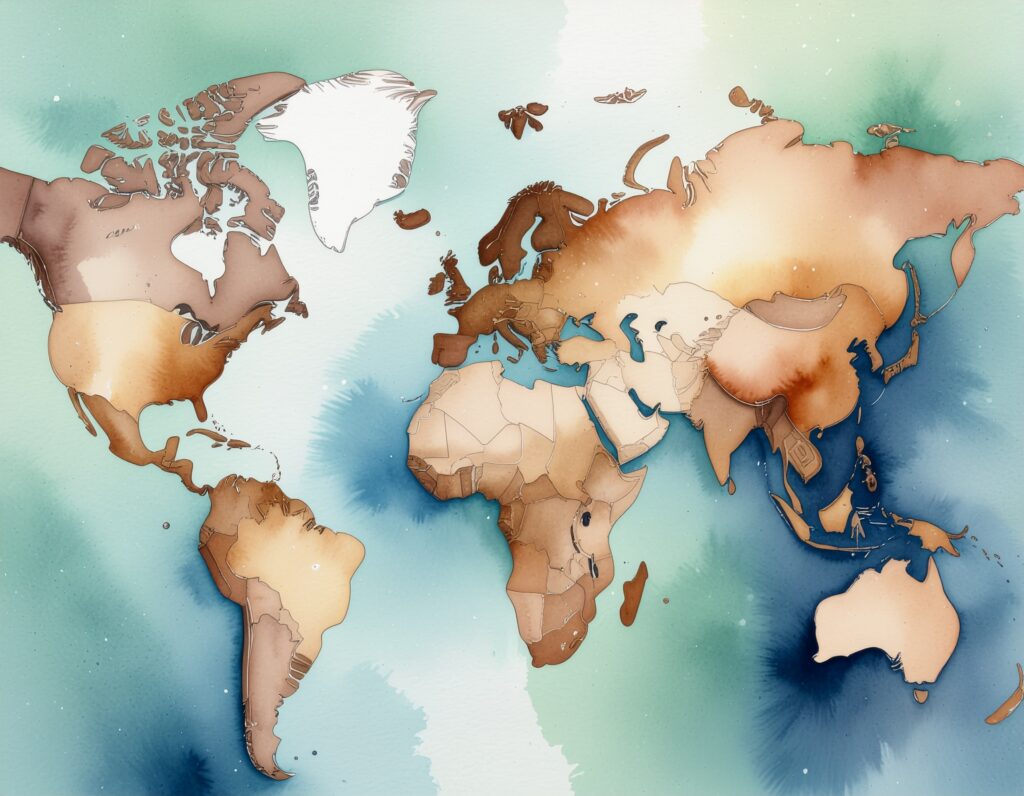
EMDR therapy has come a long way since Francine Shapiro first observed the effects of eye movements on her own distressing thoughts during a walk in a California park in 1987. What began as one researcher’s curious observation has grown into one of the most internationally recognised trauma therapies in the world. Today, EMDR worldwide spans more than 75 countries, is endorsed by the World Health Organisation, and is delivered by tens of thousands of trained practitioners. So how did it travel so far — and what does that global reach actually mean?
The appeal of EMDR across cultures may be partly rooted in how it works. Unlike traditional talking therapies, EMDR does not require someone to describe a traumatic event in detail. The processing happens through brief, guided attention to a distressing memory — using bilateral stimulation such as eye movements, tapping, or audio tones — rather than extended verbal disclosure. This makes it more accessible for people from cultures where talking openly about personal trauma can feel uncomfortable or taboo.
EMDR Worldwide: The Scale of a Global Therapy
The numbers tell a remarkable story. EMDR Europe, one of the major regional associations, now represents 43 countries across the European continent — including nations as geographically and culturally diverse as Turkey, Azerbaijan, Armenia, and Israel — with over 37,000 members. The EMDR International Association (EMDRIA), which operates mainly in North America but includes international members, counts more than 19,000 registered practitioners across 75 or more countries.
When you add in EMDR Asia, EMDR Latin America and the Caribbean, and the MENA (Middle East and North Africa) Arab Countries EMDR Association, the full picture of EMDR’s global presence becomes clear. All of these regional bodies are coordinated under the umbrella of the EMDR Global Alliance, which supports research, training, and humanitarian work across virtually every inhabited continent.
By any measure, EMDR is no longer a niche approach. It is a mainstream, evidence-based therapy used by practitioners in healthcare systems, private practice, and humanitarian programmes worldwide — and its reach continues to grow year on year.
The Organisations Shaping EMDR’s Global Growth
Several key bodies are central to expanding EMDR’s reach internationally. The EMDR Global Alliance acts as an overarching coordinating body, supporting the formation and growth of regional associations and advocating for EMDR as a global public health resource.
EMDR Europe is particularly active in research and training, hosting major international conferences and publishing guidelines for member associations. EMDRIA sets standards for training and accreditation in North America, whilst the EMDR UK & Ireland Association plays a similar role here in Britain, maintaining professional standards and advocating for access to EMDR within the NHS and private sector.
Together, these organisations help ensure that practitioners worldwide receive consistent, quality training. This matters enormously for patient safety — someone seeking EMDR in a clinic in Bristol or a community health setting in Nairobi should be working with a therapist who has received proper supervision and follows evidence-based protocols.
EMDR in Humanitarian Settings Around the World
One of the most striking dimensions of EMDR’s global reach is its use in humanitarian and crisis contexts. The ASSYST-HEART programme — Humanitarian Emergency ASSYST Response Training — had, as of early 2025, trained nearly 11,000 specialised mental health providers from 49 countries, entirely free of charge. Crucially, the training materials have been translated into 21 languages, making them accessible in regions where English is not widely spoken.
In 2025 alone, ASSYST-HEART projects have taken place in response to the January 2025 Los Angeles wildfires, in Africa supporting practitioners working with refugees and internally displaced people, in Australia to strengthen existing trauma recovery networks, and as part of EMDR Europe’s early psychological intervention programmes for crisis and disaster settings. This is EMDR being deployed not just in comfortable therapy rooms, but on the front lines of global mental health crises.
Research is also emerging from some of the world’s most challenging settings. A 2025 study from Jordan demonstrated significant improvements in subjective wellbeing amongst PTSD patients receiving EMDR therapy. In India, researchers have examined secondary trauma amongst EMDR practitioners working in crisis settings — a sign that the field is maturing and turning its attention to the wellbeing of those doing this vital work.
WHO and International Endorsements

EMDR’s global credibility owes a great deal to its endorsement by the World Health Organisation. In 2013, the WHO published clinical guidelines for conditions specifically related to stress, explicitly recommending EMDR therapy as one of the primary evidence-based treatments for PTSD in adults, adolescents, and children. The mhGAP (Mental Health Gap Action Programme) further reinforced this, specifically because EMDR can be delivered effectively even in low-resource healthcare settings — which makes it especially valuable in lower-income countries where specialist mental health services may be extremely limited.
Other major international bodies have followed suit. The International Society for Traumatic Stress Studies (ISTSS) recommends EMDR as a first-line treatment for PTSD. The American Psychological Association (APA) and the US Department of Veterans Affairs and Department of Defense (VA/DoD) both recognise EMDR as an effective, evidence-based treatment. Here in the UK, NICE — the National Institute for Health and Care Excellence — recommends EMDR as one of only two primary trauma-focused psychological treatments for adults with PTSD.
This weight of international endorsement has given EMDR the credibility it needed to expand into health systems that might otherwise have been cautious about adopting newer psychological approaches. It also sends a powerful message: this therapy has been examined rigorously and repeatedly, by independent bodies across the world, and found to work.
What Does EMDR’s Global Reach Mean for You?
Whether you are considering EMDR for yourself, for a loved one, or as a professional interested in trauma-informed care, EMDR’s worldwide growth matters for several important reasons.
It means that the therapy has been validated not just in one country or one population, but across highly diverse groups — different cultures, languages, trauma histories, and healthcare systems. Research from Jordan, India, Ukraine, and across Europe and North America all points in the same direction: EMDR works. This cross-cultural evidence base makes it one of the most robustly supported psychological therapies available.
It also means that standardised accreditation bodies in dozens of countries help ensure consistency in training and practice. Wherever you seek therapy, you can know what to look for in a qualified practitioner — and you can be confident that quality standards exist to protect you.
And here in the UK, EMDR’s global evidence base underpins the NICE recommendations that give NHS patients access to this therapy. If you’d like to understand more about how EMDR works, our guide on what EMDR therapy is is a helpful starting point. You can also explore how EMDR compares to CBT and what the latest EMDR research for PTSD says. If you’re thinking about beginning EMDR yourself, please do get in touch — we’d love to help.