

Step-by-step guidance on getting EMDR therapy through the NHS — plus your options if the wait is too long
If you’ve decided that EMDR therapy might be helpful for you, one of the first questions is almost always: can I get it on the NHS? The answer is yes — but how straightforward it is to access depends on where you live, what you’re dealing with, and which NHS service is most appropriate for your needs.
This guide walks you through the practical steps of accessing EMDR through the NHS in the UK, what you might realistically expect along the way, and the options available to you if NHS waiting times are too long.
Does the NHS Offer EMDR Therapy?
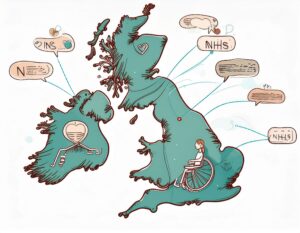
Yes. EMDR therapy is recommended by the National Institute for Health and Care Excellence (NICE) as a first-line treatment for PTSD in adults, and as a treatment to consider for children and young people who don’t respond to trauma-focused CBT. Because NICE guidance underpins NHS commissioning decisions, EMDR is supposed to be available across NHS mental health services in England, Wales, Scotland, and Northern Ireland.
In practice, availability varies considerably from one area to another. Some NHS Talking Therapies services offer EMDR directly, whilst others refer to community mental health teams or specialist trauma services. The NHS has invested in expanding EMDR provision — including launching a national EMDR training curriculum for NHS therapists in 2023 — but a shortage of trained practitioners remains a real challenge across the UK.
Step-by-Step: How to Access EMDR on the NHS
Step 1: Speak to Your GP
Your first step is usually a conversation with your GP. Explain your symptoms — particularly if you’re experiencing flashbacks, nightmares, hypervigilance, avoidance, or other signs of PTSD or trauma. You don’t need to have a formal PTSD diagnosis to ask about EMDR; you can explain that you’ve read about it and would like to know whether it might be appropriate for you.
Your GP can refer you to NHS Talking Therapies (formerly known as IAPT), a community mental health team, or a specialist trauma service — depending on how complex your needs are and what’s available locally.
Step 2: Consider Self-Referral to NHS Talking Therapies
In England, you don’t always need to go through your GP. You can self-refer directly to your local NHS Talking Therapies service for anxiety and depression. A quick online search for ‘NHS Talking Therapies [your area]’ will usually bring up your local service and their self-referral form.
It’s worth knowing that NHS Talking Therapies services tend to focus on single-incident trauma or PTSD that doesn’t involve very complex presentations. If your difficulties are more longstanding, involve childhood trauma or complex PTSD, or are accompanied by significant other mental health conditions, you may be better supported by a referral to a community mental health team or specialist trauma service.
Step 3: Attend Your Assessment
Once you’ve been referred, you’ll be invited to an assessment appointment. This is where a clinician will talk with you about your current difficulties, your history, and what kind of support might be most helpful. This is also your opportunity to mention that you are interested in EMDR specifically, and to ask whether it is available through that service.
Be honest and open about your symptoms during assessment — including their impact on your daily life, relationships, and work. The more clearly you can describe how you’re affected, the better the clinician can understand your needs.
Step 4: Be Clear About Your Preference for EMDR
NICE guidelines make clear that adults with PTSD should be offered a choice of trauma-focused psychological treatments. That includes both EMDR and trauma-focused CBT. If you have a preference for EMDR, it is entirely reasonable to state this. You may be asked why you prefer it, and your reasons are valid — whether it’s because EMDR doesn’t require detailed verbal descriptions of your experiences, because you’ve read the research, or because it has been recommended to you.
Not every service will have EMDR-trained therapists available immediately, and you may need to wait longer than for other treatments. But expressing your preference means it is on record.
What Are the Waiting Times Like?
This is where the picture becomes more challenging. NHS targets for England require that 75% of people referred to NHS Talking Therapies begin treatment within six weeks, and 95% within 18 weeks. In practice, EMDR specifically may have a longer wait than these general targets suggest, because it requires therapists with specialist training.
In Wales, Mind Cymru’s Freedom of Information data from 2024 revealed around 2,000 adults still waiting more than six months for specialist psychological therapies, with some waiting over a year. Similar regional variation exists across England, Scotland, and Northern Ireland.
If you’ve been waiting more than a few months and haven’t heard anything, it’s worth contacting your referral service directly to check on your position. You can ask to be kept updated, and you can ask what your estimated wait is.
Your Options if the NHS Wait Is Too Long

A long wait for NHS EMDR doesn’t mean you’re without options. Here are the main routes people in the UK take:
Private EMDR Therapy
Private EMDR therapists are available across the UK. Sessions typically cost between £60 and £150 each, depending on location and the therapist’s level of experience. A typical course of EMDR for PTSD involves 8 to 12 sessions, which means costs can add up — but for many people, accessing treatment sooner makes a significant difference to their quality of life.
When choosing a private therapist, ensure they hold an accreditation from EMDR UK & Ireland, or that they are registered with the British Association for Counselling and Psychotherapy (BACP) or the UK Council for Psychotherapy (UKCP). The EMDR UK website has a searchable directory.
Charitable and Third-Sector Organisations
A number of UK charities and voluntary sector organisations offer EMDR or trauma-focused therapy at reduced cost or no cost. These include organisations focused on domestic violence and abuse, veterans’ mental health (such as Combat Stress), sexual assault referral centres (SARCs), and community mental health charities. It is worth asking your GP or researching local mental health charities in your area.
Going Private While Staying on the NHS List
It’s important to know that accessing private therapy does not remove you from the NHS waiting list unless you explicitly request this. Many people choose to start private therapy while remaining on the NHS list, then transition to NHS care when their slot becomes available — or continue privately if they prefer.
Online EMDR Therapy
Online EMDR has become widely available since the pandemic and is now well-supported by research. A 2025 study by Fairbanks and colleagues confirmed that EMDR delivered via telehealth produced similar outcomes to in-person sessions for veterans with PTSD. Online delivery can significantly widen access, particularly for people in rural areas or those with mobility difficulties.
Does Private Health Insurance Cover EMDR?
Some private health insurers in the UK do cover EMDR therapy, but coverage varies considerably between policies and providers. If you have private medical insurance, check your policy documents or contact your insurer directly and ask specifically whether EMDR by an accredited therapist is covered, whether a GP referral letter is required, and whether there is a limit on the number of sessions covered.
Special Circumstances: Veterans, Perinatal Care, and Young People
UK Veterans
If you’re a veteran of the UK armed forces, you have access to dedicated services. NHS England’s Op COURAGE programme connects veterans with specialist mental health support, including trauma-focused therapies such as EMDR. Veterans NHS Wales provides a similar service in Wales. Combat Stress, the UK’s leading veterans’ mental health charity, also provides EMDR as part of its clinical programmes.
Perinatal Mental Health
EMDR is increasingly available through NHS specialist perinatal mental health services for new and expectant mothers experiencing birth trauma or perinatal PTSD. If you’re pregnant or within a year of giving birth and are experiencing trauma symptoms, ask your midwife or health visitor about perinatal mental health referral pathways — EMDR may be available through a specialist service.
Children and Young People
EMDR for children and young people is available through some CAMHS (Child and Adolescent Mental Health Services) teams, though availability varies. NICE guidelines currently recommend trauma-focused CBT as the first-line treatment for children, with EMDR considered for those who don’t respond. If you’re seeking EMDR for a child, ask your GP about CAMHS referral and specify that you’d like EMDR to be considered.
A Note on Accreditation: What to Look For
EMDR requires specific training to deliver safely and effectively. Not all therapists who mention EMDR in their profiles have completed full accreditation training. When searching for a therapist — whether through the NHS or privately — it’s worth looking for:
• Accreditation with EMDR UK & Ireland (formerly the EMDR Association UK)
• EMDR Europe accreditation, for therapists who have trained through a European EMDR training programme
• Registration with BACP, UKCP, or the British Psychological Society (BPS)
A fully trained and accredited EMDR therapist will have completed an approved training programme plus supervised practice. This matters — protocol fidelity is associated with better outcomes, so the quality of your therapist’s training is relevant to how well the therapy is likely to work.
Getting Started
If you take only one thing from this guide, let it be this: you are allowed to ask for EMDR. You don’t have to accept whatever treatment option is offered first. NICE guidelines give you the right to be offered a choice of trauma-focused therapies, and EMDR is one of them.
Start by talking to your GP, consider self-referring to your local NHS Talking Therapies service, and if waiting times are too long, use the EMDR UK therapist directory to explore private options in your area. You deserve effective treatment — and this is a good place to start.